Crawlspace Water Removal and Drying in Broken Arrow, OK
Water pooled in a crawlspace, wet insulation hanging from the joists, or a musty smell coming up through the floors? We pump the crawlspace, dry the floor framing, remove wet insulation and replace damaged vapor barrier, anywhere in Broken Arrow.
Most Broken Arrow homes sit on concrete slabs, but some older houses, including some in established neighborhoods around the Rose District in 74012, are built over crawlspaces. A crawlspace is out of sight, so water there can sit for weeks before anyone notices the smell, soft floors or high humidity upstairs. Broken Arrow Water Damage Restoration handles crawlspace water removal in 74011, 74012 and 74014.
What is crawlspace water removal? It's pumping out standing water from the space under a raised-floor home, removing wet insulation and debris, drying the joists, subfloor and beams, and restoring a vapor barrier over the soil so ground moisture stays down.
Signs of Water in Your Crawlspace
- A musty or earthy smell inside the house, often strongest near floor vents
- Floors that feel soft, bouncy or cold and damp
- Hardwood or vinyl floors cupping or lifting
- Higher humidity indoors, condensation on windows, or more allergy symptoms
- Insulation sagging or fallen from between the joists
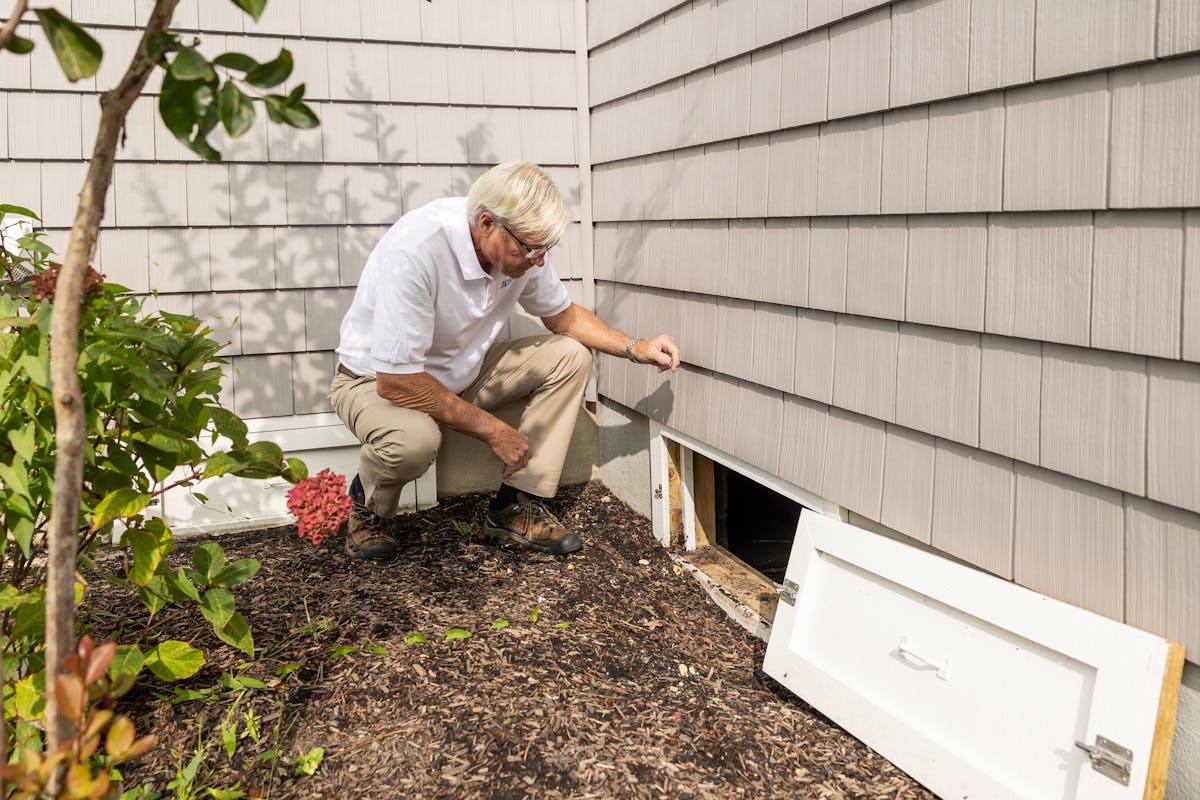
- Standing water, wet soil or a torn vapor barrier when you look through the access door
- Pests, which are drawn to damp spaces
Why Crawlspaces Get Wet
- Heavy rain and poor drainage. Gutters, downspouts and grading that send water toward the foundation let it soak into the crawlspace.
- Plumbing leaks. Supply lines, drain lines and water heater lines often run through the crawlspace, so a slow leak can go unseen. A sewer line leaking under the floor adds contamination.
- Frozen pipes. Lines in a vented crawlspace are exposed to cold air, and frozen pipes under the house can split during a hard freeze.
- Groundwater. Saturated clay soil after long rains pushes water up into low spots.
- Humid air. In summer, warm, humid outside air entering through vents can condense on cool surfaces underneath the house.
- Missing or torn vapor barrier, which lets ground moisture rise into the space.
Why a Wet Crawlspace Matters Upstairs
Air from under a raised floor moves up into the house through gaps around pipes, ducts and the subfloor. A damp crawlspace raises humidity and odors in the rooms above, and moisture held against wood framing can lead to mold on floor joists, rot in the sill plate and sagging floors over time. Wet fiberglass insulation also falls out of place and stops insulating, so floors get colder in winter.
How We Dry a Wet Crawlspace
- Inspect safely. We check the access, look for electrical hazards and note where the water is coming from.
- Document. Photos of standing water, wet framing, insulation and the vapor barrier.
- Pump out standing water with submersible pumps, and remove mud and debris left behind.
- Remove wet insulation and damaged vapor barrier. Soaked insulation is bagged and removed; torn or flooded plastic is pulled out.
- Clean affected surfaces if the water came from a sewer line or surface runoff.
- Dry the framing. Dehumidifiers and air movers sized for the space dry the joists, beams and subfloor; we take readings on the wood until it's dry.
- Restore the vapor barrier. New polyethylene sheeting goes down over the soil, overlapped at seams, to keep ground moisture down.
- Point you to the source fix. We tell you whether the water came from plumbing, gutters and grading, or groundwater, so a plumber or drainage contractor can stop it from returning.
Keeping Your Crawlspace Dry
- Keep gutters clean and extend downspouts several feet away from the house
- Slope soil around the foundation away from the walls
- Keep a continuous vapor barrier over the crawlspace floor
- Insulate exposed pipes so they don't freeze
- Check the crawlspace after heavy rain and after hard freezes
- Ask a contractor whether sealing and dehumidifying the crawlspace (encapsulation) makes sense for your home
Crawlspace Water and Insurance
A sudden plumbing failure under the house, like a pipe that burst, is often treated differently by insurers than groundwater seepage, poor drainage or long-term humidity, which many policies exclude. Coverage depends on your policy, so we don't promise outcomes; we document the source and damage clearly.
What affects the cost of crawlspace water removal:
- How much standing water there is and how easy the crawlspace is to access
- How much insulation and vapor barrier must be replaced
- Whether the water was clean or came from a sewer line or runoff
- How wet the framing and subfloor got
- How many days of drying the readings call for
We explain these on site before work begins.
Crawlspace Questions
Is standing water in my crawlspace bad?
Yes, if it stays. A little water after a storm that drains away within a day is less of a concern, but water that sits raises humidity under and inside the house, wets insulation and framing, and can lead to mold and wood rot. It also usually means there's a drainage or plumbing problem to fix.
Why does my house smell musty from underneath?
A musty smell that's strongest near floor vents or in low rooms often comes from damp soil, wet insulation or mold growth in the crawlspace. Check through the access door for water, sagging insulation or a torn vapor barrier.
Does wet crawlspace insulation have to be replaced?
Usually, yes. Wet fiberglass batts sag, fall out of place and hold moisture against the subfloor. The EPA's guidance for water-damaged buildings is to replace wet insulation rather than dry it.
Can I pump out my crawlspace myself?
You can remove a small amount of clean water with a utility pump if there are no electrical hazards and the space is safe to enter. Deep water, sewage, wet framing or insulation, or water that keeps coming back usually needs professional removal and drying.
How long does it take to dry a crawlspace?
Usually several days after the water and wet insulation are out. Larger spaces, heavy clay soil and very wet framing take longer. We dry until the wood readings show the joists and subfloor are dry.
Water Under Your House? Dry It Before It Rises
A wet crawlspace keeps feeding humidity and odor into the rooms above. Call now and we'll pump it out, dry the framing and restore the barrier.