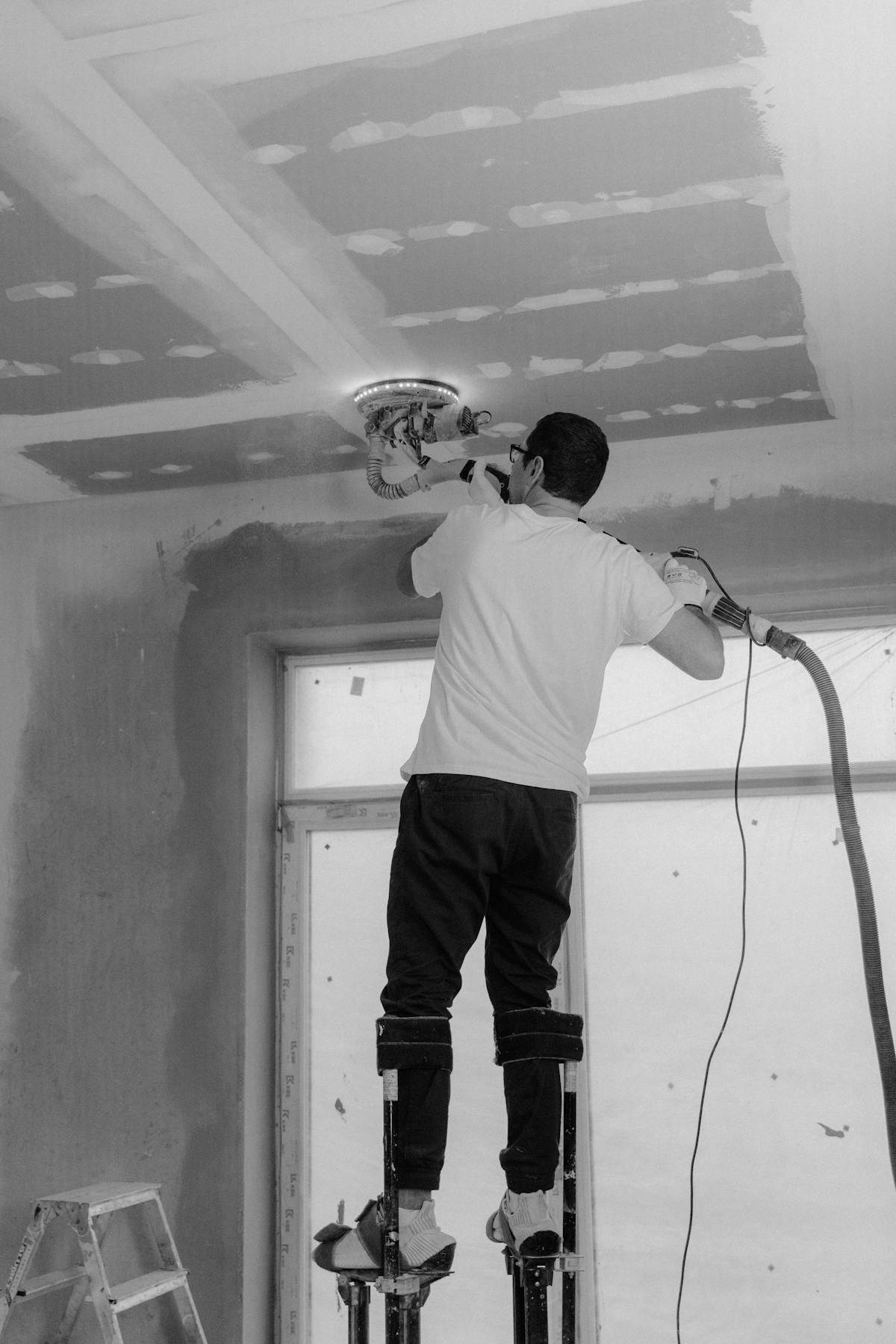
Ceiling Water Damage Repair in Broken Arrow, OK
A brown stain, a bubble in the paint or water dripping from a light fixture means water is already sitting above your ceiling. We find where it's coming from, dry the insulation, joists and drywall, and then repair the ceiling, anywhere in Broken Arrow.
By the time a ceiling shows a stain, the insulation above it is usually soaked and the drywall paper is wet. Painting over it or waiting for it to "dry on its own" traps that moisture where you can't see it. Broken Arrow Water Damage Restoration handles ceiling water damage for homes and businesses in 74011, 74012 and 74014, drying first and repairing second.
What is ceiling water damage repair? It's finding the source of a ceiling leak, removing the water and wet insulation above the ceiling, drying the drywall and framing to a measured dry standard, and then patching, texturing and painting the ceiling so the stain doesn't come back.
Water Leaking Through Your Ceiling? Do This Now
- Turn off lights and ceiling fans in that room, and switch off the breaker if water is near a fixture or outlet.
- Put a bucket or tub under the drip and move furniture, rugs and electronics out of the way.
- Stay out from under a bulge. A ceiling holding water can come down suddenly.
- If it's bulging and you can do it safely, stand to the side and poke a small hole at the lowest point with a screwdriver so the water drains into the bucket in one place.
- Find the source if you can: an upstairs bathroom, the attic AC unit, a water heater above, or the roof during rain. If it's a supply line, shut off the main water valve.
- Take photos, then call (918) 739-1874.
Where Ceiling Water Comes From
The stain is rarely right under the leak. Water runs along joists, pipes and the top of the drywall before it soaks through, so the source can be several feet away.
| Source | Clues |
|---|---|
| Upstairs bathroom | Stain below a toilet, tub or shower; worse after someone bathes; a failed wax ring, shower pan or tub drain |
| Attic AC unit | Leaks in hot weather when the AC runs hard, often from an attic air handler overflowing when the condensate line clogs |
| Roof | Stains that appear or grow after rain, often after hail and wind damage to the roof lifts shingles or vents |
| Burst pipe in the attic | Sudden heavy dripping after a hard freeze, often through light fixtures |
| Water heater above the ceiling | A tank or drain pan in the attic leaking down |
| Condensation on ducts | Small spots near vents in humid weather, from cold ducts sweating in the attic |
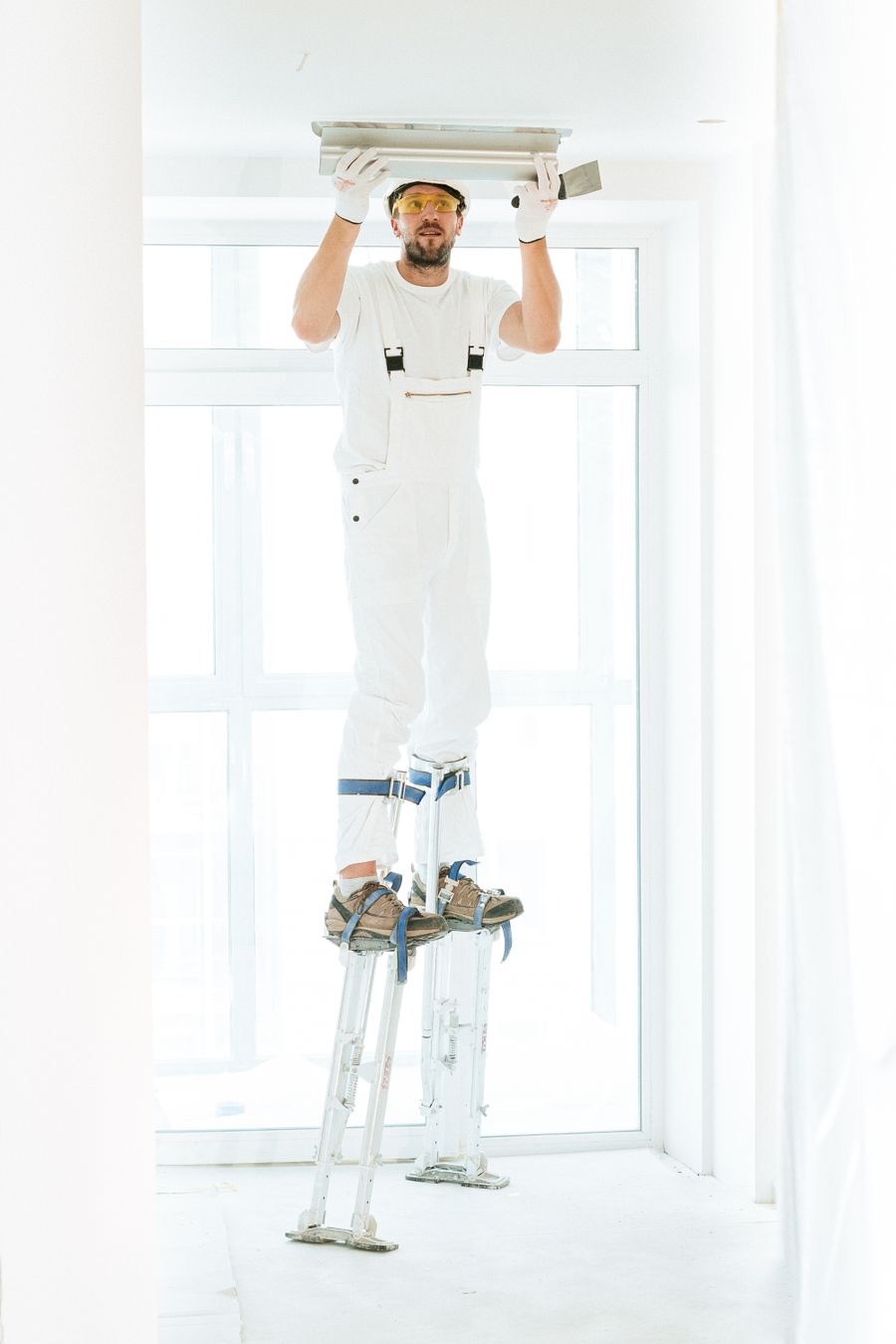
Signs of Water Above Your Ceiling
- Yellow or brown rings, even small ones
- Paint that bubbles, peels or cracks
- A sagging or soft spot in the drywall
- Water dripping from a light fixture, smoke detector or vent
- Drywall seams or nail heads showing through
- A musty smell in the room or from the vents
Why Painting Over a Water Stain Doesn't Fix It
A stain is a sign that water already soaked the drywall and the insulation behind it. Blown-in and batt insulation hold water against the back of the ceiling for days, and the EPA advises replacing wet insulation rather than trying to dry it. If that moisture stays, the stain bleeds back through the new paint, the drywall weakens, and you can end up with mold growing above the ceiling where no one sees it.
The right order is: stop the source, remove the wet insulation, dry the drywall and joists until the readings prove they're dry, then repair and paint.
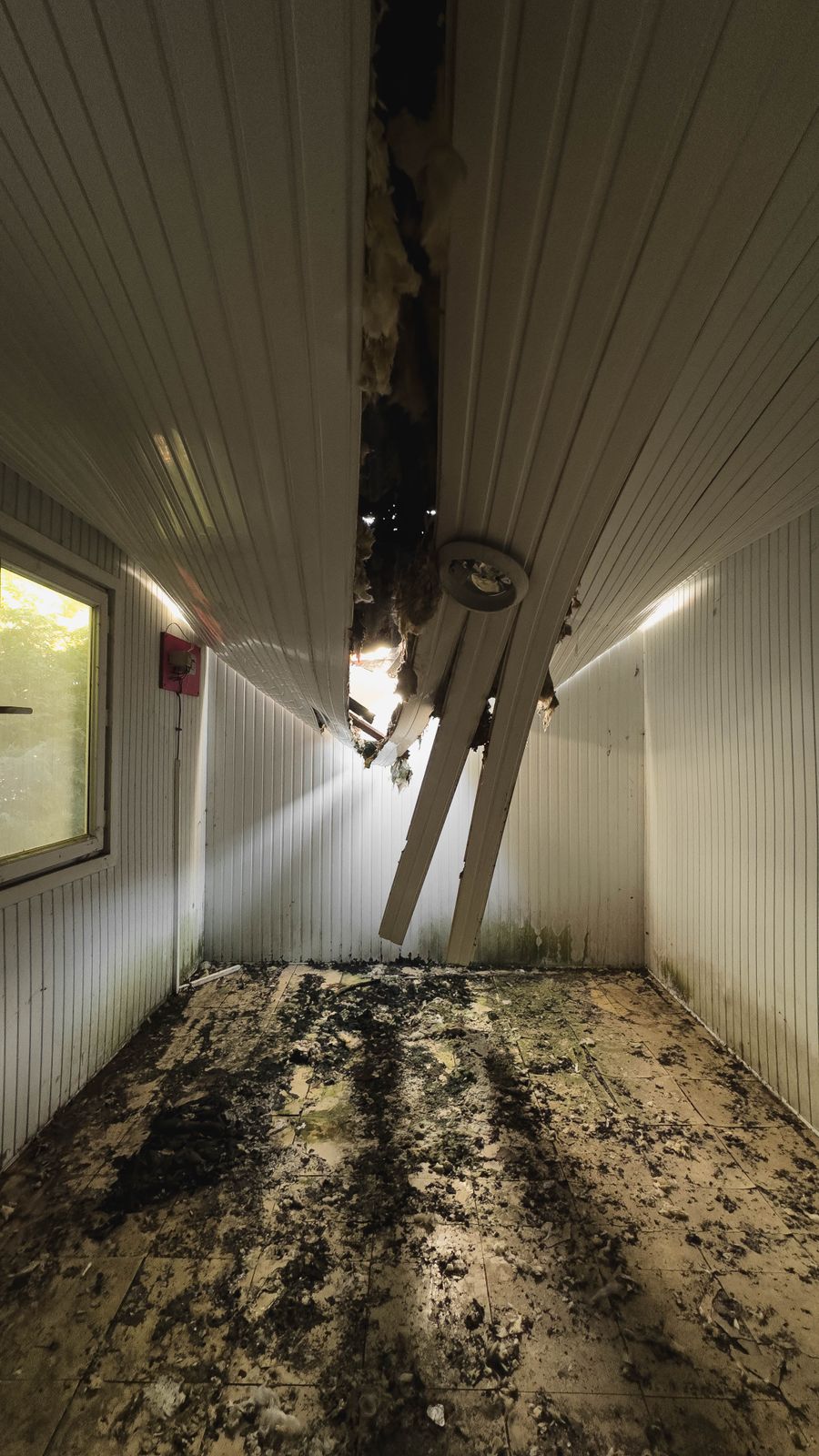
Our Ceiling Water Damage Process
- Make it safe. Power off to the affected fixtures, water drained from any bulge, and the room cleared below.
- Find and stop the source. We trace the water back to the bathroom, pipe, AC unit or roof, and make sure it's stopped or covered before drying starts.
- Map the moisture. Thermal imaging and moisture meters show how far the water spread across the ceiling and down into the walls, well past the visible stain.
- Document. Photos and readings of the source and every wet area, before anything is removed.
- Remove what can't be saved. Wet insulation above the ceiling comes out. Drywall that is sagging, crumbling or soaked through is cut out; drywall that is wet but firm is often dried in place.
- Dry the ceiling system. Dehumidifiers and air movers dry the room, and ceiling-cavity drying pushes dry air between the joists.
- Check every day. Readings at marked points until the drywall and joists match dry areas of the home.
- Repair. New drywall where needed, a stain-blocking primer, texture matched to the rest of the ceiling, and paint.
Ceiling Leaks and Insurance
A ceiling soaked by a sudden event, like a burst pipe, an overflowing tub or a roof opened by wind or hail, is often treated differently by insurers than a slow drip that went on for months or a roof that wore out. The repair to the source itself, like the plumbing or the roof, is often handled separately from the water damage it caused. Coverage depends on your policy, so we don't promise outcomes; we document the source, the damage and the drying so your adjuster has a clear record.
What affects the cost of ceiling water damage repair:
- The source, and whether it's clean water or a drain or toilet leak
- How much of the ceiling and how many walls got wet
- How much insulation and drywall has to be replaced
- Ceiling height, texture type and how much needs to be matched
- How many days of drying the readings call for
We explain these on site before work begins.
Ceiling Water Damage Questions
Why is my ceiling leaking when it isn't raining?
When it isn't raining, the water is usually coming from plumbing or equipment, not the roof. Common culprits are an upstairs toilet, tub or shower, a supply line in the attic, an attic AC unit whose drain line clogged, or a water heater above the ceiling. If the leak gets worse when the AC runs or after someone showers, that's a strong clue.
Is water dripping from a light fixture dangerous?
Yes. Water and electricity together can cause shocks and shorts. Turn off the light switch and the breaker for that room, don't touch the fixture, and keep people out from under it. Have the fixture checked before you turn the power back on.
Can I just paint over a water stain on my ceiling?
Not until the leak is fixed and the drywall and insulation behind it are dry. Paint over a wet stain and it usually bleeds back through, and the hidden moisture can lead to mold. Once dry, a stain-blocking primer under the paint keeps it from showing again.
Does a wet ceiling have to be replaced?
Not always. Drywall that's wet but still firm and flat can often be dried in place. Drywall that sags, crumbles or stays soft is cut out and replaced. Wet insulation above the ceiling is almost always replaced. We test before deciding.
How long does a ceiling take to dry after a leak?
Usually a few days once the source is stopped and the wet insulation is out. Large areas, plaster ceilings or leaks that ran for a long time take longer. Equipment stays until moisture readings show the drywall and joists are dry.
Who do I call for a leaking ceiling: a roofer, a plumber or a water damage company?
Whoever fixes the source, plus someone to dry the damage. A roofer fixes roof leaks, a plumber fixes pipes, and an HVAC tech clears AC drain lines. We remove the water, dry the ceiling system and repair the drywall. Call us first if you're not sure where the water is coming from.
Water Stain or Drip Overhead? Don't Wait
Water above a ceiling keeps spreading into insulation, joists and walls until it's dried. Call now and we'll find the source, dry it properly and repair the ceiling so the stain doesn't come back.