Mold Remediation After Water Damage in Broken Arrow, OK
Mold doesn't appear on its own. It grows where water stayed too long: behind a baseboard after a slow leak, above a ceiling under a dripping AC unit, or under carpet that never fully dried. We find the moisture that's feeding it, contain the area, remove what can't be saved and dry it properly, anywhere in Broken Arrow.
Broken Arrow's long, humid summers give mold an easy start once something gets wet. Broken Arrow Water Damage Restoration handles mold remediation tied to water damage for homes and businesses in 74011, 74012 and 74014, starting with the water problem, because cleaning mold without fixing the moisture only buys time.
What is mold remediation? Often called mold removal, it's removing mold growth and the materials it has damaged, cleaning the surfaces that remain, and drying the area so the moisture that caused it is gone. Remediation isn't just killing mold on the surface; the source of water has to be stopped or it comes back.
Signs You Have Mold After Water Damage
- A musty, earthy smell, especially after the AC turns on or in a closed room
- Dark spots or fuzzy growth on drywall, baseboards, ceilings or under sinks
- Paint that bubbles or peels, or drywall that feels soft
- A water stain that keeps coming back after it's painted
- Allergy-like symptoms that ease when you leave the house
- A past leak or flood that was never professionally dried
Where Mold Starts in Broken Arrow Homes
- Above ceilings from attic AC condensate leaks, roof leaks and attic pipes
- Behind baseboards and inside walls from slow supply-line leaks and slab leaks
- Under carpet and pad that dried on the surface but stayed wet underneath
- Under sinks and behind appliances from dishwasher, ice maker and drain leaks
- In older homes with crawlspaces, where crawlspace moisture rises into floors and walls
- In storm shelters and closed rooms that took on water and were never dried
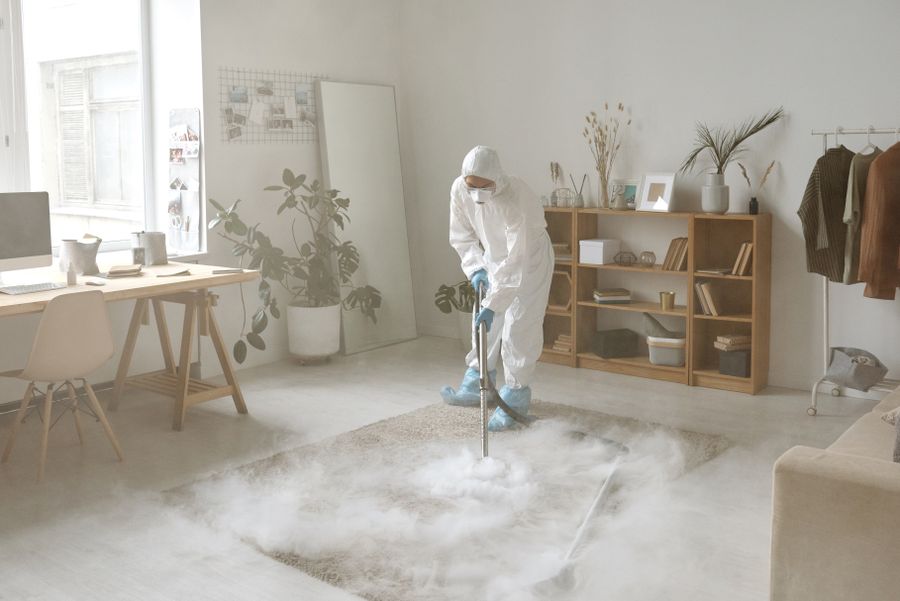
Moisture First, Then Mold
The EPA's first rule for mold cleanup is to fix the water problem and dry everything completely (EPA). It also warns against painting or caulking over moldy surfaces, because the paint is likely to peel and the problem stays underneath. That's why every mold job we do starts with a moisture map, not a spray bottle.
Can You Clean Mold Yourself?
For small areas, often yes. The EPA says that if the moldy area is less than about 10 square feet, in most cases you can handle it yourself, and that larger areas call for professional guidance. Call for help when:
- Mold covers more than about 10 square feet, or keeps returning
- It's inside walls, above ceilings or under flooring
- It followed sewage or floodwater
- It's in the HVAC system or ductwork
- Someone in the home has asthma, allergies or a weakened immune system
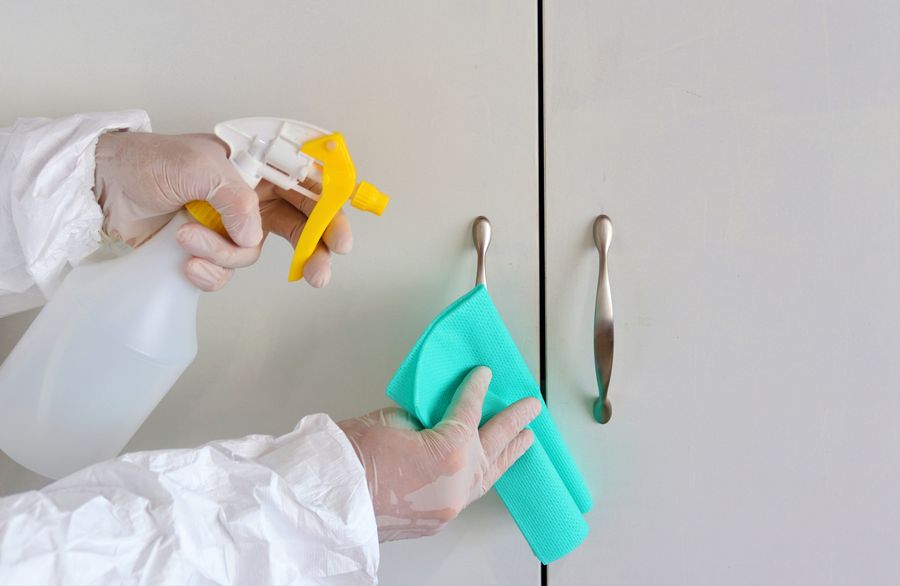
Our Mold Remediation Process
- Find the moisture. Thermal imaging and moisture meters locate the wet materials feeding the mold, including areas inside walls and above ceilings you can't see.
- Stop the source. The leak, condensation or drainage problem has to be fixed first, or by a plumber, roofer or HVAC tech, before remediation can last.
- Document. Photos of the growth, the moisture readings and the source.
- Contain the area. Plastic barriers and negative air pressure keep spores and dust from spreading to clean rooms while work is under way.
- Filter the air. HEPA air scrubbers capture airborne particles in the work area.
- Remove what can't be cleaned. Moldy drywall, insulation, carpet, pad and other porous materials are bagged and removed. Mold growing in water from a sewage backup is handled as Category 3 water cleanup.
- Clean what stays. Wood framing and hard surfaces are cleaned to remove growth and residue.
- Dry everything. Dehumidifiers and air movers bring the area down to dry readings, so mold doesn't return.
- Check before rebuilding. Moisture readings confirm the area is dry before new drywall, insulation or flooring goes in.
Do You Need Mold Testing?
Often not. When mold is visible and you know where the water came from, the job is to fix the moisture and remove the growth, whatever the species. Testing can help when you smell mold but can't find it, after major water damage that sat for a while, or when someone needs documentation for a sale, lease or health concern.
Mold and Insurance
Many homeowners policies limit or exclude mold, especially mold from a long-term leak, humidity or lack of maintenance. Mold that results from a sudden, covered water event, like a burst pipe, is sometimes covered up to a set limit. Coverage depends on your policy, so we don't promise outcomes; we document the source, the growth and the work so your adjuster has a clear record.
What affects the cost of mold remediation:
- How large the affected area is and how many rooms are involved
- Whether the mold is on the surface or inside walls, ceilings or floors
- How much drywall, insulation and flooring has to be removed
- The level of containment the job needs
- Whether the moisture source still needs to be fixed
We explain these on site before work begins.
Mold Questions
How fast does mold grow after a leak?
The EPA advises drying water-damaged materials within 24 to 48 hours to prevent mold growth. In warm, humid weather like a Broken Arrow summer, wet drywall, carpet pad and insulation can start growing mold within that window if they aren't dried.
My house smells musty after water damage. Is that mold?
Often, yes. A musty smell usually means something is still damp and microbial growth has started, even if you can't see it. Check under sinks, behind baseboards near the old leak, and inside closets. A moisture meter or thermal camera can find wet areas hidden in walls and floors.
Can I just spray bleach on mold?
On a small spot on a hard, non-porous surface, a cleaner can remove it. On drywall, wood and carpet, spraying only treats the surface, and growth inside the material remains. Never mix bleach with ammonia or other cleaners, because the fumes are toxic. Fixing the moisture matters more than the product.
Is black mold more dangerous than other mold?
Any mold growing indoors should be removed, whatever its color. Color doesn't reliably tell you the species, and the cleanup approach is the same: fix the water, remove or clean the growth, and dry the area. People with asthma, allergies or weak immune systems should stay away from the work area.
Do I need to leave my house during mold remediation?
Usually not for a small, contained job. The work area is sealed off with barriers and air filtration. For large jobs, or if someone in the household has a respiratory condition, it can make sense to stay elsewhere until the work is done.
Will mold come back after remediation?
Not if the moisture is gone. Mold returns when the leak, condensation or humidity problem that fed it wasn't fixed. That's why we confirm dry readings before rebuilding, and why keeping indoor humidity in check matters after the job.
Musty Smell or Spots After a Leak? Find the Water First
Mold is a moisture problem first. Call now, and we'll find what's wet, remove what can't be saved and dry it so it doesn't come back.