
Appliance Leak Floor Damage in Broken Arrow, OK
A dishwasher, refrigerator ice-maker line or washing machine can leak for days before anyone sees it. The water slips under click-together floors, into cabinet bases and along the subfloor, where it can't dry on its own. We find it, dry the subfloor and walls, and tell you straight what can be saved, anywhere in Broken Arrow.
Water under LVP flooring, laminate or cabinets is one of the most common hidden leaks we find. Many newer Broken Arrow kitchens and laundry rooms have luxury vinyl plank (LVP) or laminate floors and particleboard cabinets, which handle water badly once it gets underneath. Broken Arrow Water Damage Restoration handles appliance leak floor damage for homes in 74011, 74012 and 74014.
What is appliance leak floor damage? It's water damage to flooring, subfloors, cabinets and lower walls caused by a household appliance or its supply line, such as a dishwasher, refrigerator ice maker, washing machine or water softener. Because the water usually runs underneath, the damage is often larger than the puddle you can see.
Appliance Leaking? Do This Now
- Shut off the appliance's water. Close the valve behind the fridge, under the sink for the dishwasher, or behind the washer. If there's no valve or it won't close, shut off the main.
- Unplug or switch off the appliance at the breaker, only if you can do it without standing in water.
- Pull out what you can safely move, like the washer or a freestanding fridge, to see behind it.
- Wipe up surface water, then press a towel along plank seams and baseboards. If water keeps coming up, it's underneath.
- Take photos, then call (918) 739-1874.
Common Appliance Leaks
| Appliance | Where it usually fails |
|---|---|
| Dishwasher | Supply line, door gasket, drain hose or pump; water hides under the dishwasher and toe kick |
| Refrigerator ice maker | The thin water line behind the fridge cracks or a fitting loosens; slow leaks run for weeks |
| Washing machine | Rubber supply hoses burst, drain hoses slip out, or the tub overflows |
| Kitchen and bath sinks | Supply lines, faucet connections and drain traps under the cabinet |
| Water softener and filters | Fittings and bypass valves in the garage or utility room |
| Toilets | Supply line, tank bolts or the wax ring at the floor |
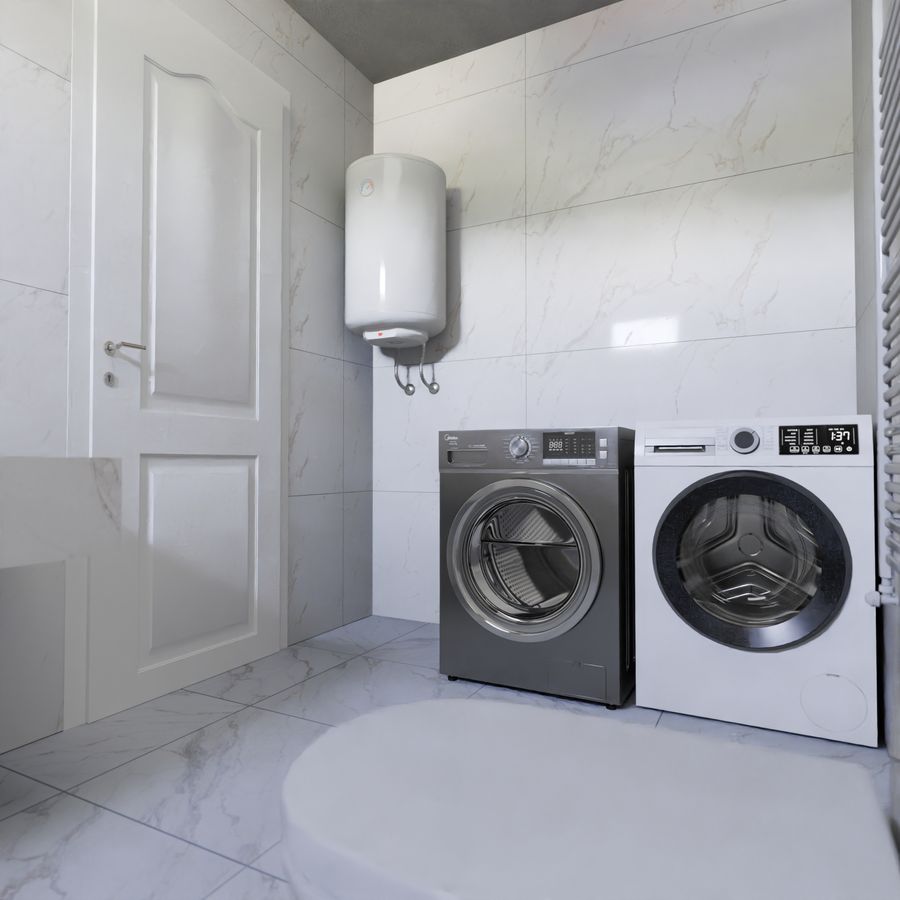
Signs Water Is Hiding Under Your Floor
- LVP or laminate planks that lift, peak or separate at the seams
- Floors that feel soft or spongy near the appliance
- Cabinet bottoms or toe kicks that swell, bubble or crumble
- Baseboards that stay damp or start to stain
- A musty smell when you open the sink cabinet or move the fridge
- Wet flooring in a room with no appliance nearby, which can point to a leak under the concrete slab instead
What Happens to Your Floors and Cabinets
| Material | What usually happens |
|---|---|
| LVP and laminate | Water trapped under click-together planks can't evaporate. Planks in the wet area are usually lifted so the subfloor can dry; LVP planks can sometimes be reinstalled, swollen laminate usually can't. |
| Hardwood | Fast drying with floor mat systems can often reduce cupped or buckled wood floors; badly swollen boards are replaced. |
| Carpet | Clean-water carpet can often be dried in place with new pad, the usual outcome for carpet soaked by a washer overflow caught early. |
| Tile | Usually stays; water under it and in grout lines is dried, and cracked or loose tiles are reset. |
| Particleboard cabinet bases | Swell and crumble when wet, so toe kicks or cabinet bottoms often need replacing. Solid wood and plywood cabinets can usually be dried. |
| Subfloor (plywood or OSB) | Dried in place if firm; replaced if it's delaminated or soft. On concrete slabs, the slab surface is dried. |
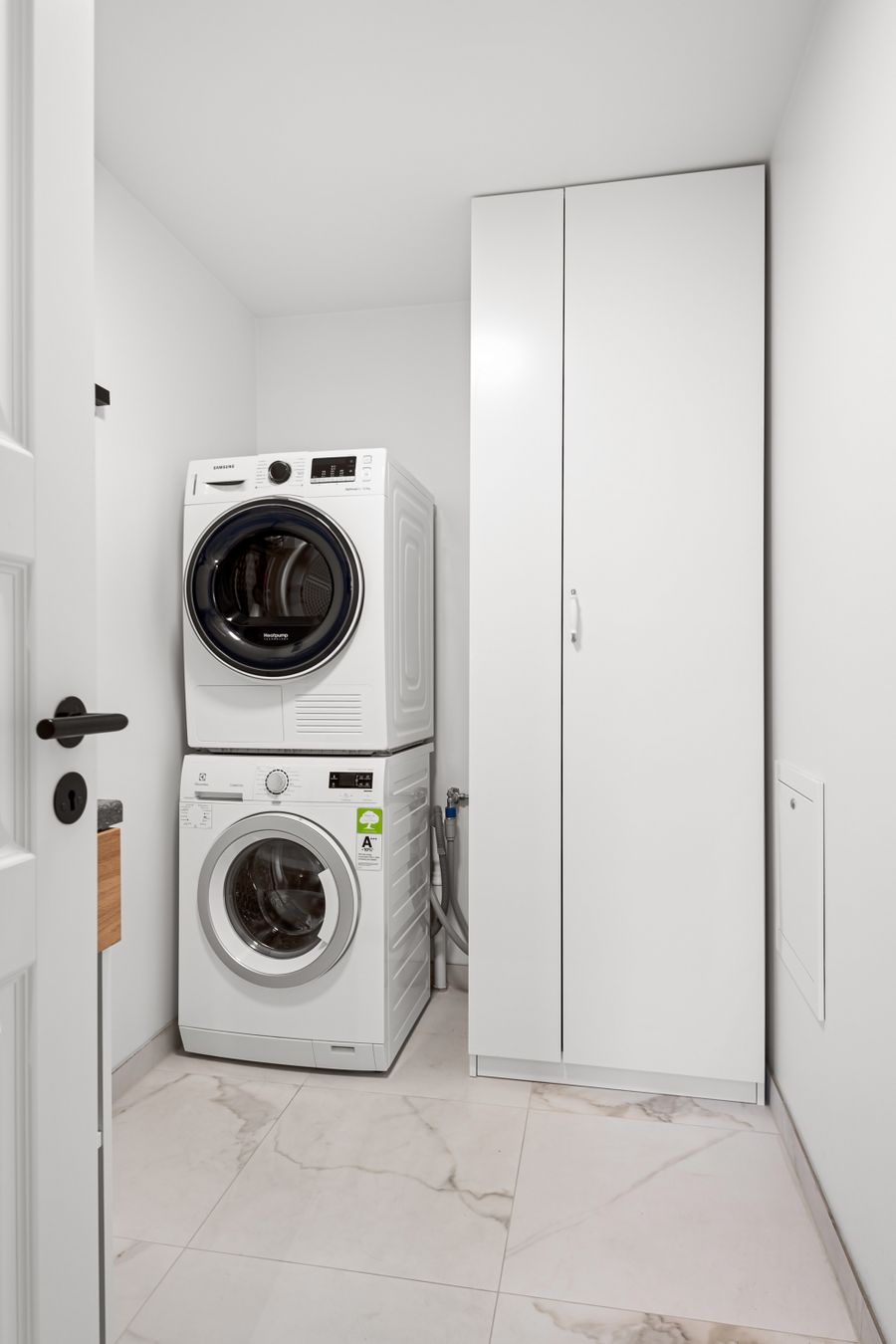
How We Dry Appliance Leak Damage
- Confirm the water is off at the appliance and that the line is capped or repaired.
- Document the appliance, the failed part and every wet area.
- Map the moisture. Thermal imaging and moisture meters show how far water spread under flooring, behind cabinets and into walls.
- Open only what's needed. Toe kicks come off so we can reach under cabinets; planks are lifted in the wet zone; baseboards come off so walls can dry.
- Dry the subfloor, cabinets and walls. Dehumidifiers and air movers dry the room, and targeted drying reaches under cabinets and inside wall cavities.
- Check daily until the readings match dry areas of the home, then hand over the drying log for the flooring installer.
How to Prevent the Next Appliance Leak
- Replace rubber washing machine hoses with braided stainless steel lines
- Check the ice-maker line and dishwasher supply line every few months
- Leave a few inches behind the washer so hoses don't kink
- Put leak alarms under the dishwasher, fridge, washer and water heater
- Use a drain pan under the washer if it's on an upper floor
- Know where each appliance's shut-off valve is
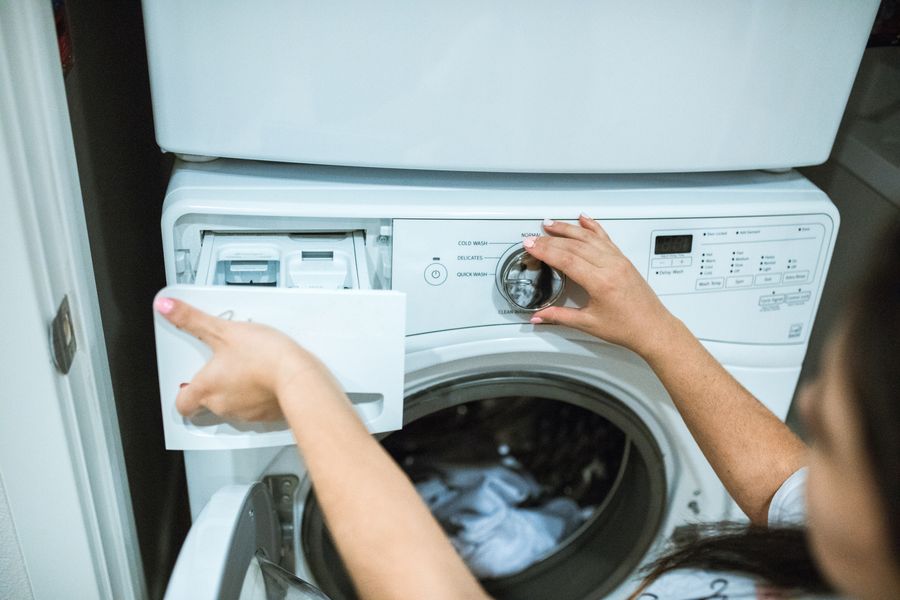
Appliance Leaks and Insurance
A sudden failure, like a washer hose that bursts, is often treated differently from a slow leak that went on for weeks, which some policies exclude. The appliance or failed part itself is usually separate from the water damage. Coverage depends on your policy, so we don't promise outcomes; we document the source and the spread clearly.
What affects the cost of appliance leak floor damage:
- How long the leak ran before it was found
- The flooring type and how much has to be lifted or replaced
- Whether cabinets, baseboards or drywall were reached
- Whether the water was clean (a supply line) or dirty (a drain or dishwasher discharge)
- How many days of drying the readings call for
We explain these on site before work begins.
Appliance Leak Questions
Can LVP flooring be dried, or does it have to be replaced?
The planks themselves usually survive water, but what's under them doesn't dry while they're in place. In the wet area, planks are typically lifted so the subfloor or slab can dry, then reinstalled if the click edges and planks are undamaged. Laminate with a fiberboard core swells and usually has to be replaced.
Water is coming up between my floor planks. What does that mean?
It means water is trapped underneath and is being pushed up through the seams when you step on them. Shut off the nearby appliance supply lines, check behind and under them, and call before it spreads further under the floor and into cabinets.
My dishwasher leaked under the cabinets. Will they be ruined?
It depends on what they're made of and how long they were wet. Particleboard cabinet bases and toe kicks swell and often need replacing. Plywood and solid wood can usually be dried. Removing the toe kick lets us dry underneath and see the damage.
How do I know if my refrigerator water line is leaking?
Look for water or ice-maker drips behind the fridge, warped or lifting floor in front of it, a musty smell, or a water bill that went up. Pull the fridge out carefully and check the line and its fitting at the wall valve.
Is water from a washing machine clean?
Water from a burst supply hose is clean. Water from the drain hose or tub overflow during a wash cycle carries soap, dirt and residue and is treated as gray water, so more of the porous material it soaked may need to be removed.
How long does it take to dry after an appliance leak?
Usually a few days once the flooring in the wet area is lifted. Leaks that ran for weeks, reached under cabinets or soaked a wood subfloor take longer. We dry until the readings match unaffected areas of the home.
Water Under Your Floors? Find It Before It Spreads
Water trapped under flooring and cabinets keeps soaking the subfloor until it's opened up and dried. Shut off the appliance and call now.